Assessing Support Person Suitability Through a Cultural Lens: Practical Tools
During the workshop, we explored how applying a cultural lens can change the way we assess support people in restorative justice processes.
Many practitioners are familiar with family violence frameworks that focus primarily on the relationship between the offender and victim. While these frameworks remain valuable, they can sometimes encourage us to think about power and control as something exerted by a single individual.
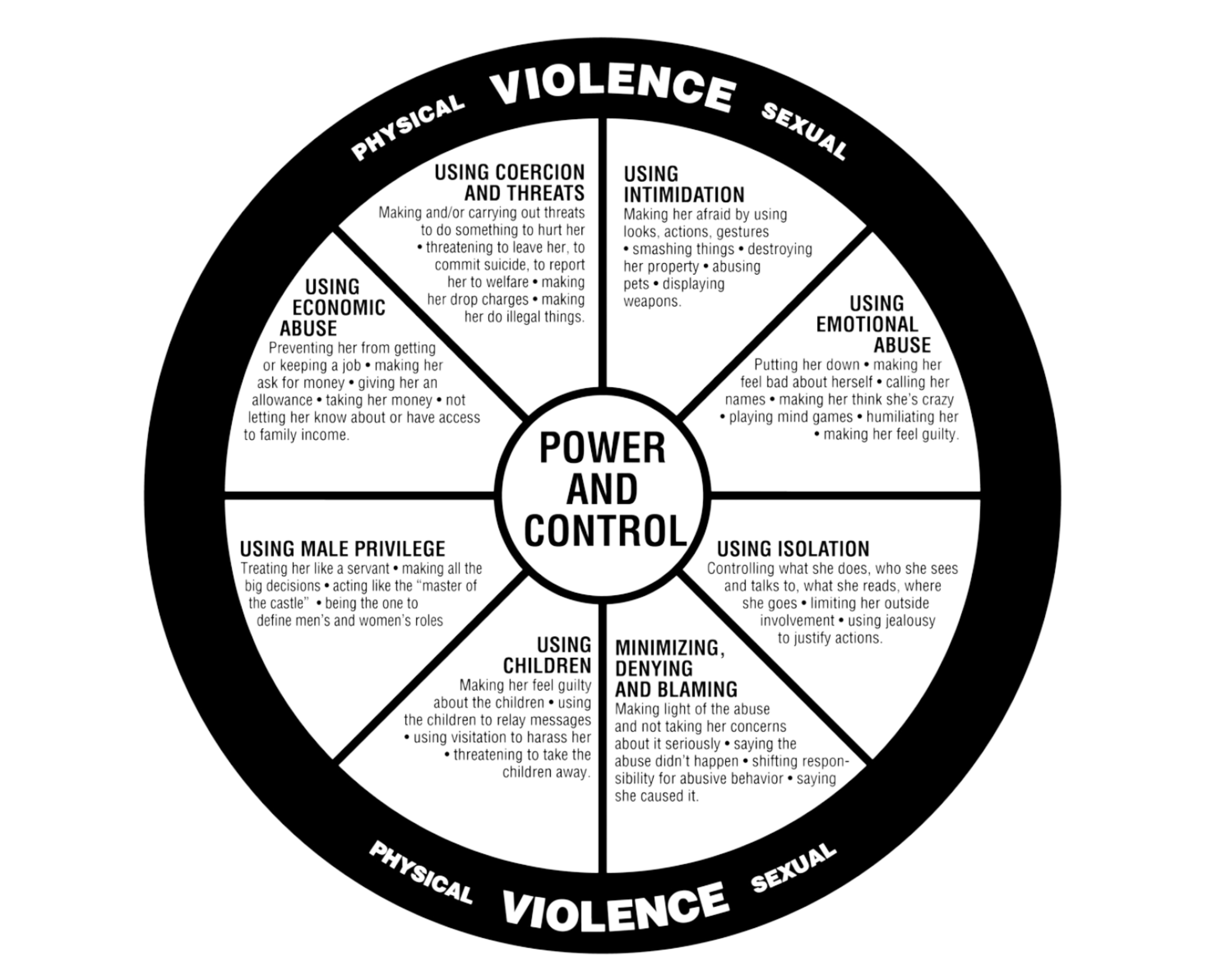
Power and Control Wheel created by the Domestic Abuse Intervention Project in Duluth, MN.
When working with some Indian and South Asian families, it can be helpful to widen the lens.
Many South Asian cultures place significant importance on family interconnectedness, collective identity, hierarchy, family reputation, and community relationships. As a result, power, influence, pressure, support, and decision-making may not sit solely with the primary parties. They can also involve parents, in-laws, siblings, adult children, extended family members, religious leaders, and wider community networks.
This does not mean these influences are always harmful. Family and community can be powerful sources of support, protection, accountability, and healing. However, they can also create pressures that affect a person's ability to speak openly, make independent decisions, leave harmful situations, challenge family members, or participate freely in restorative justice processes.
For facilitators, this means support person assessment becomes particularly important.
The question is not simply:
"Who does the participant want to bring?"
The question is also:
"How might this person's presence influence safety, voice, accountability, and participation?"
Questions to Consider When Assessing Support Person Suitability
Understanding Their Relationship to the Harm
Are they a family member?
What is their relationship to each party?
Were they present during the violence?
Were they aware of the violence? If so, for how long were they aware?
Understanding Their Capacity to Support
What is their capacity to support with either safety or accountability?
Do they live nearby the party or parties, or are they overseas?
What support are they willing to offer?
Are they willing and able to challenge harmful behaviour if required?
Exploring Victim Safety
Is the victim okay with them being a supporting party within the RJ process?
Has the victim confirmed this with you while speaking privately?
Understanding Their Beliefs About the Harm
How do they talk about what happened?
What language do they use?
Are they normalising family violence?
Are they minimising the harm?
Do they place responsibility on the victim?
Are they focused on accountability, or simply on restoring family harmony?
Questions to Explore Support Person Suitability
Thinking back to the scenario we worked through at the workshop, we discussed how we approached the mother-in-law, who was present during the assault.
Examples of questions we asked her to assess her suitability included:
You mentioned that this is a family matter. When your daughter-in-law was being assaulted, what did you do to stop your son and keep her safe?
I understand that after the assault you chose to move in with your son at his bail address. As an elder in the family, what ongoing support are you giving to your daughter-in-law while she is injured and is at home alone?
When asked appropriately, these questions invite reflection rather than accusation. They help facilitators understand how a support person views their responsibilities, the harm that occurred, and their potential role in supporting either safety or accountability.
Special Considerations When Adult Children Are Proposed as Support People
Adult children are often identified as support people. In some cases, they may become powerful allies for safety and accountability. In others, they may have grown up within family systems where violence, hierarchy, gender expectations, or victim-blaming have become normalised.
Facilitators may wish to explore:
Did they witness violence growing up?
How long have they been aware of the violence?
How do they talk about the abuse?
Do they hold the offender accountable?
Do they challenge harmful behaviour?
Do they blame or minimise the victim's experiences?
Are they focused on supporting the victim's voice and safety?
The goal is not to exclude family members. The goal is to understand how family dynamics may influence the restorative justice process and to ensure support people strengthen, rather than undermine, safety, voice, and accountability.